
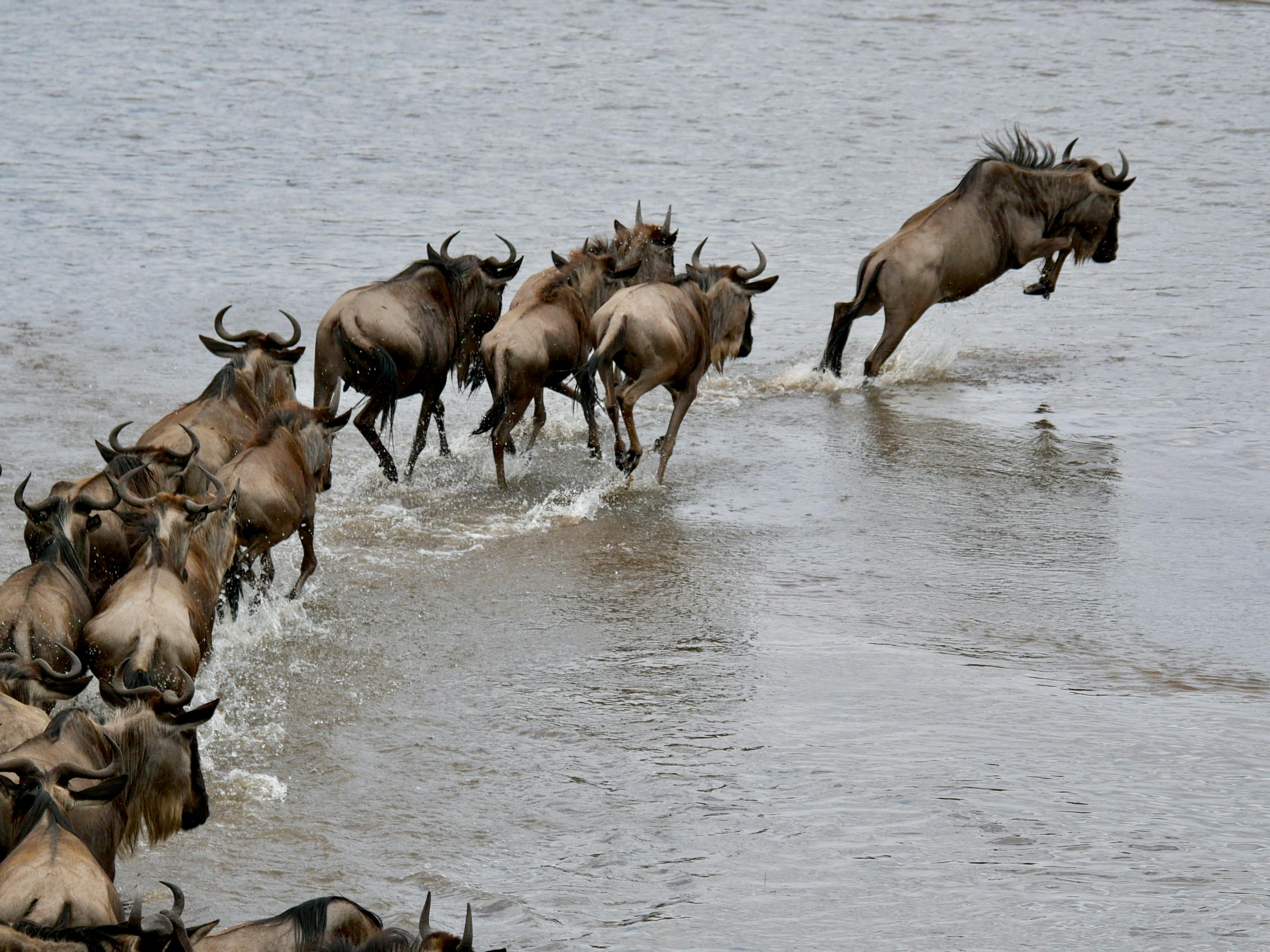
Why Do Wildebeest Migrate?
A Complete Guide by Tanzania Safari Source
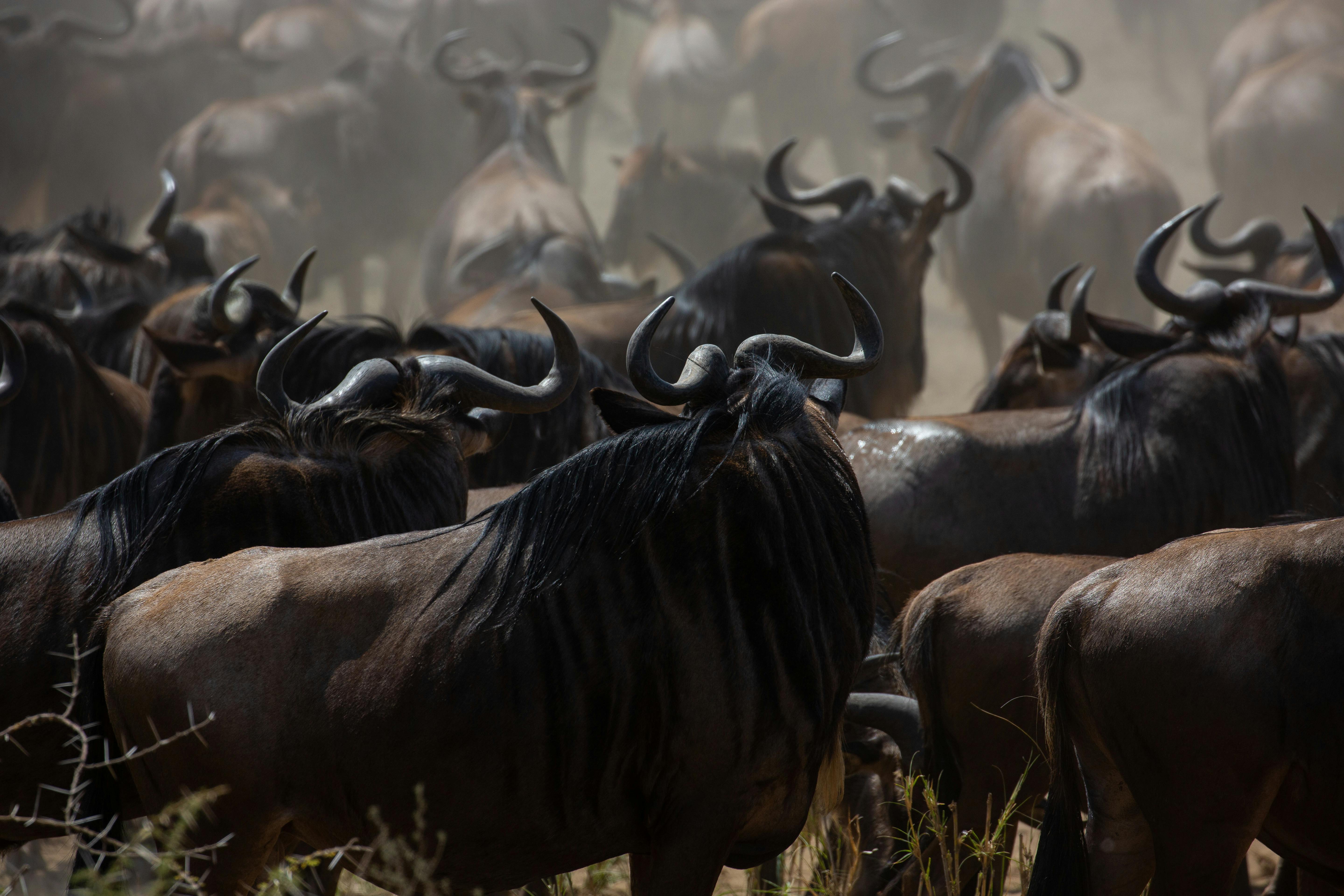
Every year, one of the most extraordinary wildlife spectacles on Earth unfolds across the plains of northern Tanzania and southern Kenya the Great Migration. At the heart of this movement are over 1.5 million wildebeest, accompanied by hundreds of thousands of zebras and gazelles, all traveling in a continuous, circular journey.
At Tanzania Safari Source, we often get asked one simple but fascinating question: why do wildebeest migrate?
The answer is both beautifully simple and incredibly complex. It is a story of survival, instinct, weather patterns, and the delicate balance of nature. In this guide, we will take you deep into the reasons behind this iconic journey, helping you truly understand what makes the migration one of the most powerful wildlife experiences in the world.
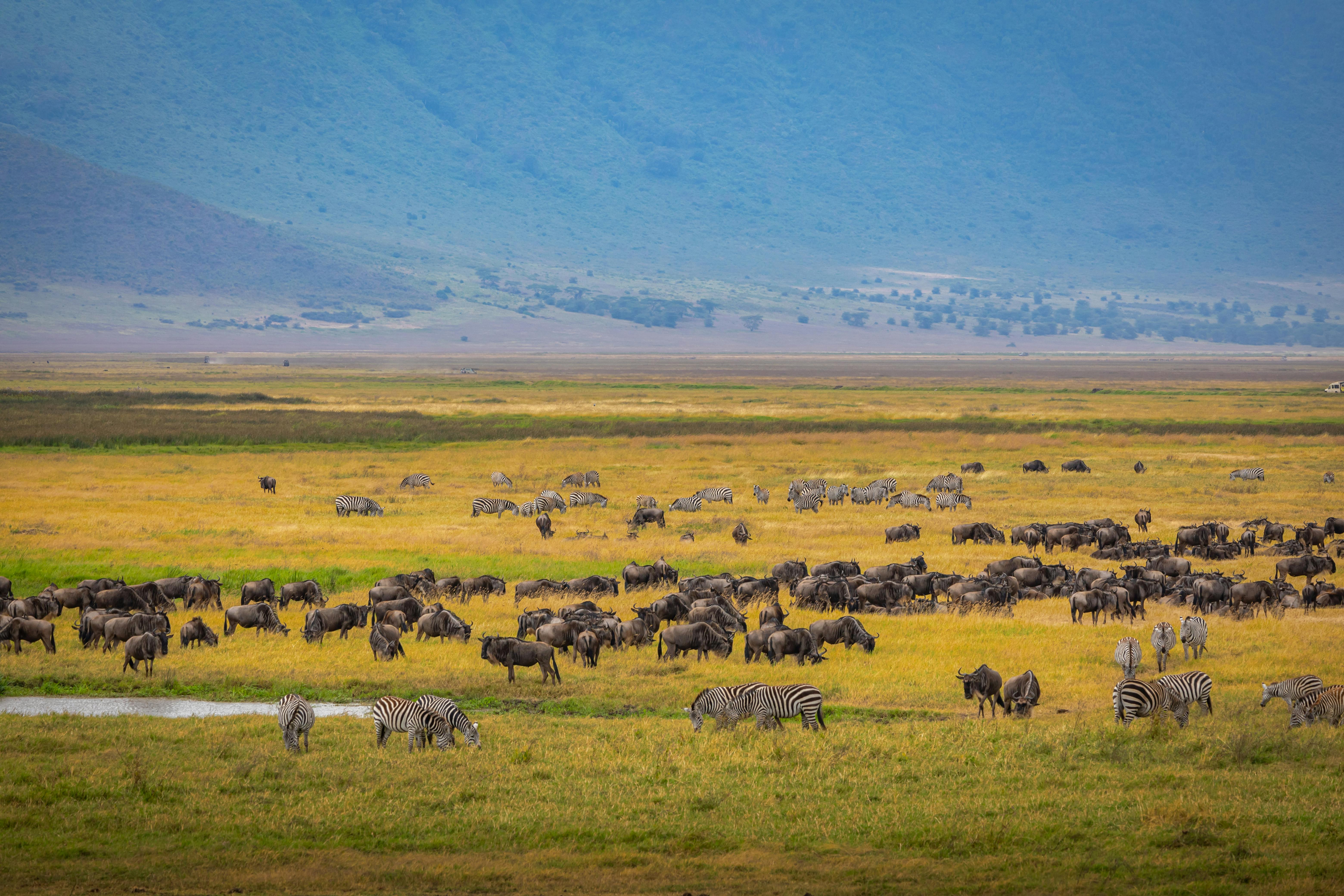
The Simple Answer: Survival
At its core, wildebeest migrate for one main reason to survive.
Unlike many animals that stay within a fixed territory, wildebeest are constantly on the move in search of two essential resources:
-
Fresh grass
-
Water
The plains of the Serengeti ecosystem are highly seasonal. Rainfall is not evenly distributed throughout the year, and when the rains move, the grass follows. Wildebeest must follow this moving food supply or risk starvation.
At Tanzania Safari Source, we design our safaris around this natural rhythm because understanding this movement is the key to witnessing the migration at its best.
Following the Rain: Nature’s Invisible Map
Wildebeest do not use maps, but their movement is incredibly precise. They follow rainfall patterns across the Serengeti-Mara ecosystem, guided by instinct and environmental cues.
When it rains, new grass grows quickly. This fresh grass is:
-
Rich in nutrients
-
Easier to digest
-
Essential for energy and reproduction
As the dry season begins in one area, the herds begin to move toward regions where rain has recently fallen.
This creates a continuous cycle of movement, not a one time journey. The migration never truly stops it is a year round process.
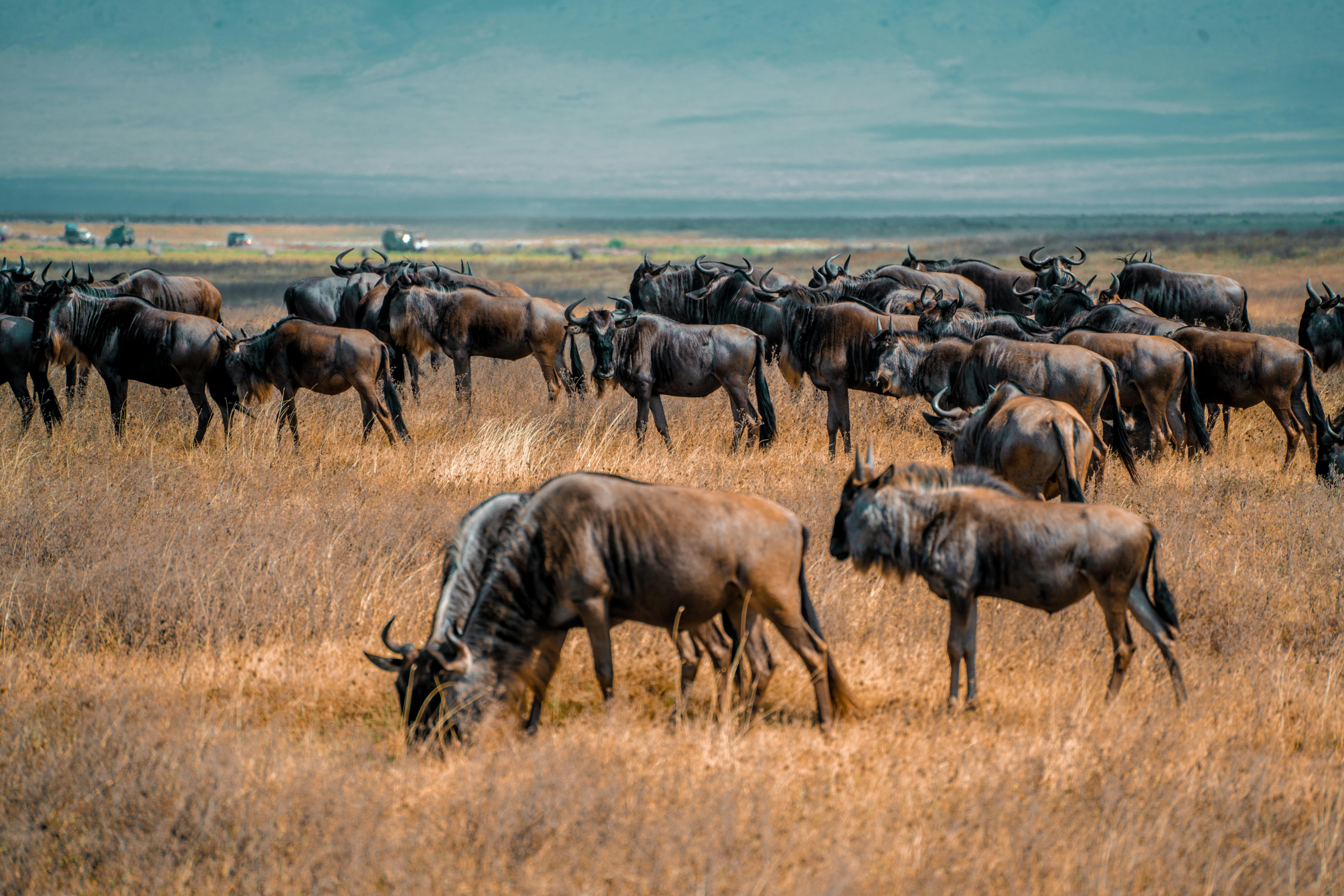
The Role of Instinct
One of the most remarkable aspects of the migration is that it happens without leadership or planning in the human sense.
There is no single “leader” guiding the herd. Instead, wildebeest rely on:
-
Deep-rooted instinct
-
Sensitivity to distant thunderstorms
-
The smell of rain and fresh grass
Calves are born into this movement and quickly learn to keep up. Within minutes of birth, a newborn wildebeest can stand and run a crucial adaptation for survival in a landscape filled with predators.
We often tell our guests that when you witness the migration, you are not just watching animals move you are witnessing instinct in its purest form.
Calving Season: A Critical Driver
One of the biggest reasons wildebeest migrate is reproduction.
Between January and March, the herds gather in the southern Serengeti and Ndutu region for calving season. During this time:
-
Over 500,000 calves are born within a few weeks
-
The area offers nutrient-rich short grass
-
Open plains provide better visibility against predators
This synchronized birth is a survival strategy. By having so many calves born at once, predators cannot possibly catch them all increasing the chances of survival for the majority.
At Tanzania Safari Source, we highly recommend this period for travelers who want to witness the beginning of the migration cycle and incredible predator prey interactions.
Predator Pressure: Survival of the Fittest
The migration is not just about food it is also about avoiding danger.
The Serengeti ecosystem is home to some of Africa’s most powerful predators:
-
Lions
-
Hyenas
-
Leopards
-
Cheetahs
-
Crocodiles
As the wildebeest move, predators follow. This creates one of the most dramatic wildlife spectacles on Earth.
However, movement itself is a survival strategy. By constantly traveling in large numbers, wildebeest:
-
Reduce the risk for any one individual
-
Confuse predators with sheer numbers
-
Increase overall herd survival
This is why the migration is often described as a balance between life and death.
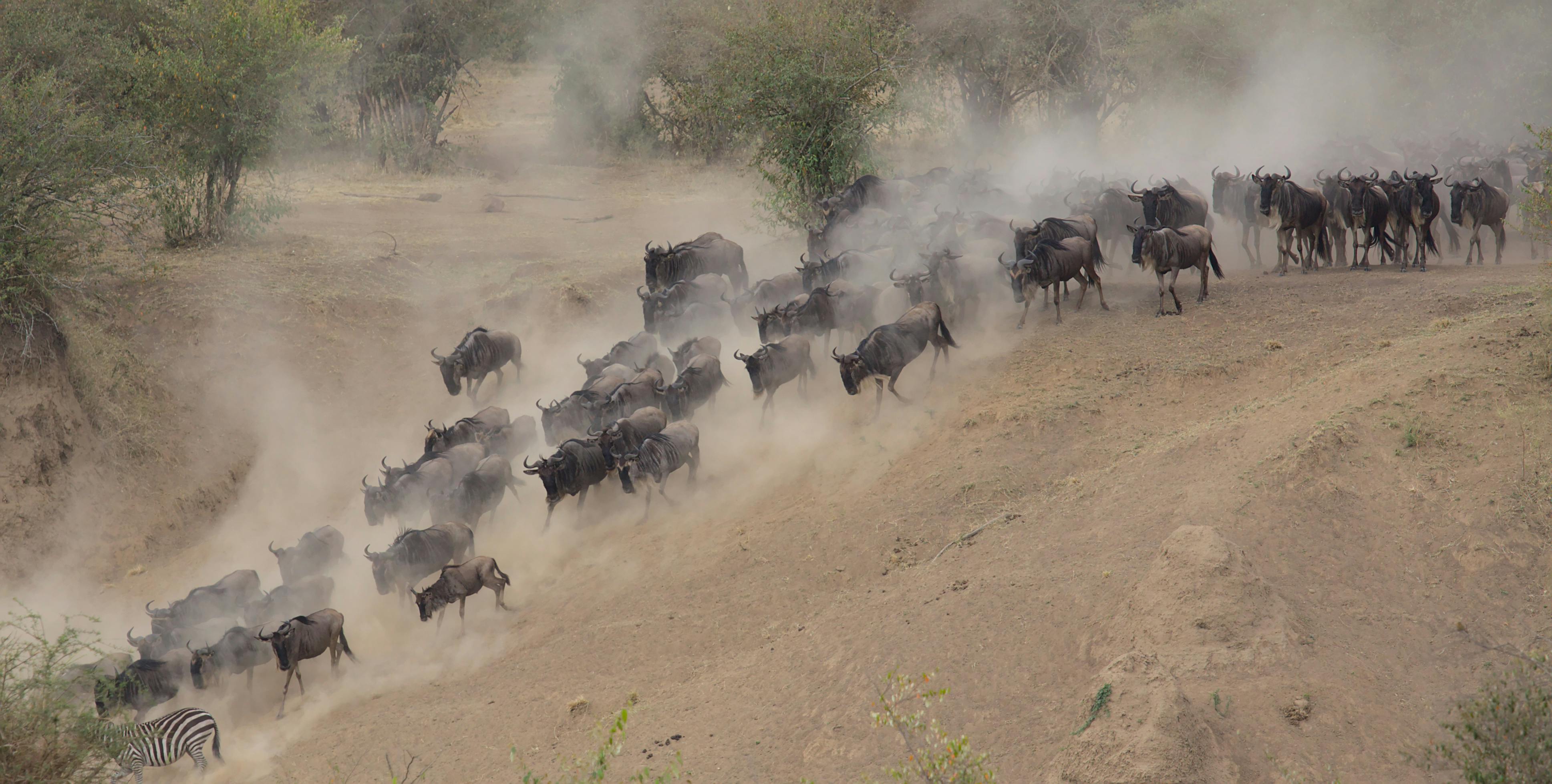
River Crossings: The Most Dramatic Moment
Perhaps the most iconic scenes of the migration are the river crossings, particularly in the northern Serengeti.
As the herds move toward greener pastures, they must cross rivers filled with strong currents and lurking crocodiles. These crossings are:
-
Chaotic
-
Dangerous
-
Completely unpredictable
But they are necessary.
The drive to reach fresh grazing land is stronger than the fear of danger. Wildebeest will gather at riverbanks, hesitate, and then suddenly surge forward in massive numbers.
At Tanzania Safari Source, we guide our guests to the right locations at the right time to safely witness these unforgettable moments.
The Role of Zebras and Other Animals
Wildebeest do not migrate alone.
They are joined by:
-
Zebras
-
Thomson’s gazelles
-
Elands
Each species plays a role in the ecosystem:
-
Zebras eat longer grass, preparing the ground
-
Wildebeest follow, feeding on shorter, fresher shoots
-
Gazelles come last, eating the most delicate growth
This cooperation allows multiple species to benefit from the same environment, making the migration a shared survival strategy.
A Continuous Circle, Not a Straight Line
One of the biggest misconceptions is that the migration is a simple journey from one place to another.
In reality, it is a circular movement that repeats every year:
-
Southern Serengeti (calving season)
-
Central Serengeti (transition and grazing)
-
Western corridor (river crossings begin)
-
Northern Serengeti (dramatic Mara River crossings)
-
Return south as rains begin again
Because of this cycle, there is no single “best time” only different experiences depending on when and where you travel.
Why This Matters for Your Safari
Understanding why wildebeest migrate is not just interesting it directly affects your safari experience.
At Tanzania Safari Source, we use this knowledge to:
-
Position you in the best locations for wildlife viewing
-
Minimize unnecessary driving
-
Maximize time spent with animals
-
Match your travel dates with the most rewarding experiences
Whether you want to witness calving season, predator action, or river crossings, we tailor each safari based on the movement of the herds.
The Emotional Impact of the Migration
Beyond science and survival, the migration is deeply emotional.
When you stand in the Serengeti and watch thousands of wildebeest stretching across the horizon, you feel something powerful:
-
The scale of nature
-
The rawness of life
-
The connection between animals and environment
It is not just a wildlife event it is a reminder of how nature works in perfect, sometimes harsh, harmony.
Many of our guests tell us that witnessing the migration changes their perspective on the natural world.
Why Travel With Tanzania Safari Source?
At Tanzania Safari Source, we do more than organize safaris we create meaningful experiences.
We understand the migration because we live and work within this ecosystem. This allows us to offer:
-
Expert local guides who track wildlife movements daily
-
Carefully selected camps in prime locations
-
Flexible itineraries based on real time conditions
-
Personalized service from planning to departure
We don’t just take you to see the migration we help you understand it.
Final Thoughts
So, why do wildebeest migrate?
They migrate to survive to find food, water, and safe conditions for raising their young. But in doing so, they create one of the most breathtaking natural events on Earth.
At Tanzania Safari Source, we believe that understanding this journey makes witnessing it even more powerful. It transforms a safari from simply seeing animals into experiencing a living, moving ecosystem.
If you have ever dreamed of seeing the Great Migration, we would be honored to help you plan it thoughtfully, comfortably, and in the best possible way.
Ready to experience the Great Migration?
We are here to design your perfect safari.
Our package for you
Contact Us for the Best Choice of Your Safari