
Ngorongoro Crater: The Eighth Wonder of the World
In northern Tanzania, cradled between the Serengeti plains and the lush highlands, lies a landscape so extraordinary it feels like stepping into a dream. The Ngorongoro Crater is not just a destination; it is a living testament to the power of nature and the delicate balance of life. UNESCO has recognized it as a World Heritage Site, calling it the Eighth Wonder of the World, and for good reason.
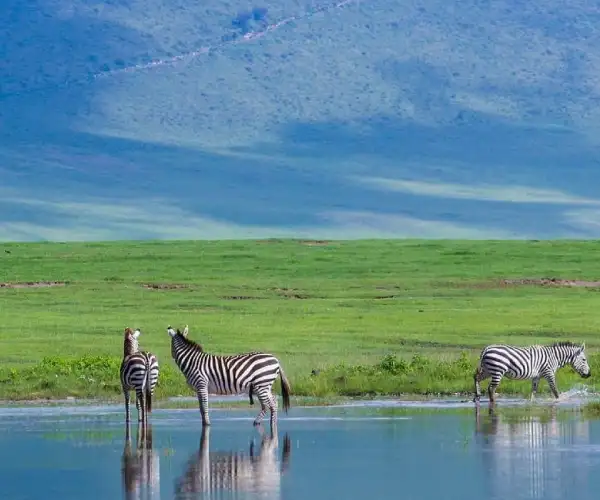
From the moment you stand on the crater rim and gaze down at the vast, enclosed world below, you are filled with awe. Rolling grasslands dotted with grazing zebras and wildebeest stretch for miles. Towering acacia trees provide shade for elephants and giraffes. Flamingos dot the soda lakes with splashes of pink. And everywhere, the raw, unfiltered sounds of wildlife lion roars, hyena calls, and bird songs fill the air.
Visiting Ngorongoro is not merely a safari; it is a journey into ancient geological history, thriving ecosystems, and living culture. Every step, every glance, every moment immerses you in a story millions of years in the making.
1. A Geological Marvel Millions of Years in the Making

Ngorongoro’s story begins deep in the geological past. Over two million years ago, a massive volcano towered over northern Tanzania, shaping the surrounding landscape. Eventually, after repeated eruptions, the peak collapsed, forming a vast, unbroken caldera the Ngorongoro Crater.
Today, this natural amphitheater spans approximately 260 square kilometers, with walls rising over 600 meters high. The crater’s floor forms a self-contained ecosystem where wildlife thrives in a rare, concentrated harmony.
From the rim, the first thing that strikes you is scale. The crater feels both immense and intimate: a contained world bustling with life. Morning mist drifts lazily across the highlands, and the golden light of dawn paints everything in surreal hues. Watching the sun rise over the crater is a moment of quiet wonder, where the boundaries between sky, earth, and life below seem to dissolve.
For photographers, this is paradise. Every angle tells a story: sunbeams filtering through clouds, shadows stretching across grasslands, and wildlife silhouettes frozen against the horizon. It’s a view that is both humbling and exhilarating the kind that leaves an indelible mark on your soul.
2. Wildlife in a Living Paradise
The Ngorongoro Crater is renowned for its dense and diverse wildlife. Within its walls, over 25,000 large animals coexist, making it one of the most biologically rich areas in Africa. Here, you are likely to witness:
-
The Big Five: lion, leopard, elephant, buffalo, and the critically endangered black rhinoceros.
-
Herds of wildebeest and zebras, often moving in graceful unison across open plains.
-
Predators and scavengers, like hyenas, jackals, and cheetahs, performing life-and-death dramas in front of your eyes.
-
Bird species in abundance, including crowned cranes, pelicans, and the iconic pink flamingos of Lake Magadi.
What makes Ngorongoro special is the intimacy of the encounters. Unlike open savannahs, where wildlife is scattered, the crater’s enclosed geography allows you to observe multiple species interacting in their natural environment. You might see a pride of lions lazing under an acacia tree while elephants pass quietly nearby. A group of wildebeest grazes as a cheetah slinks through tall grasses in search of prey. Every moment feels like witnessing a living documentary.
And yet, there’s a sense of calm, a rhythm to life here. Even as predators hunt, and herbivores graze, the ecosystem moves in balance, a reminder that life in the wild is both fragile and resilient.
3. The Maasai: Guardians of Tradition and the Land

The Ngorongoro Crater is not just a haven for wildlife; it is home to the Maasai people, semi-nomadic pastoralists who have lived here for centuries. Their presence is a vital part of the landscape. The Maasai herd cattle on the crater rim and surrounding highlands, practicing a lifestyle that has remained remarkably unchanged for generations.
Visiting a Maasai village is an unforgettable cultural immersion. You’ll see vibrant shúkà cloths, intricate beadwork, and traditional huts called bomas. You may witness ceremonies, hear ancient stories, and learn how the Maasai coexist with wildlife avoiding conflicts while maintaining a deep respect for the natural world.
Their connection to Ngorongoro is spiritual as much as practical. Every hill, river, and grazing ground has significance, and they play a vital role in conservation. When you interact with the Maasai, you gain a deeper understanding of the land, its challenges, its beauty, and its history.
4. Experiencing the Crater: A Day in the Wild
A visit to Ngorongoro is more than just a game drive, it's an immersive journey from dawn to dusk.
Morning: Descend into the crater as the sun rises. Mist clings to the crater walls, and the air is crisp. You’ll likely spot herds of zebras and wildebeest moving across open plains. Predators are most active in the morning, so keep your camera ready for lion or cheetah sightings.
Midday: Stop for a picnic near Lake Magadi, where hippos wallow in the water, flamingos paint the landscape pink, and birds soar above. The crater’s flora from acacia trees to grassy wetlands provides endless visual interest and wildlife observation points.
Afternoon: Continue exploring. Watch elephants moving majestically through woodlands. See hyenas scavenge and interact with jackals. Perhaps catch a glimpse of the rare black rhino grazing in secluded areas. The crater floor is a microcosm of African wildlife, alive with movement and interaction.
Sunset: Ascend back to the rim. As the sun sets, the sky transforms into brilliant oranges and purples. The crater below becomes a silhouette of life, a living painting that leaves you awestruck.
This combination of landscape, wildlife, and emotional engagement makes a Ngorongoro safari unforgettable.
5. Seasons of Magic in the Crater
Ngorongoro offers a unique experience in every season.
-
Dry Season (June – October): Easier wildlife spotting, shorter grass, and cooler temperatures. Predators are easier to find, and waterholes attract dense concentrations of animals.
-
Green Season (November – May): Lush vegetation, dramatic skies, and migratory birds. February is calving season for wildebeest in nearby Ndutu, a spectacular display of life and survival.
The crater is a destination that rewards both first-time visitors and returning travelers. Each visit reveals new patterns, behaviors, and moments that are never the same twice.
6. Conservation: Protecting a Living Wonder
Ngorongoro is a model of conservation and sustainable tourism. Managed by the Ngorongoro Conservation Area Authority (NCAA), the area balances wildlife protection with human habitation. Tourism revenues help fund anti-poaching efforts, maintain infrastructure, and support Maasai communities.
Responsible tourism ensures that your visit contributes to this delicate balance. Simple actions like following park guidelines, using eco-friendly lodges, and supporting local Maasai enterprises can make a huge difference. By visiting mindfully, travelers become part of the conservation story rather than mere spectators.
7. Tips for an Unforgettable Visit
-
Start Early: Morning safaris offer the best lighting and wildlife activity.
-
Stay Near the Rim: Lodges and camps provide easy access, stunning views, and a comfortable base.
-
Dress in Layers: Temperatures can vary dramatically between the rim and crater floor.
-
Hire a Guide: Local guides provide insights into wildlife behavior, geology, and Maasai culture.
-
Bring Binoculars & Camera: Every corner of the crater offers breathtaking photo opportunities.
8. Why Ngorongoro Captures Hearts

It’s impossible to describe the full impact of Ngorongoro without experiencing it. Standing on the rim, gazing at the thriving ecosystem below, you feel a connection to something ancient, vast, and alive. The scale humbles you; the beauty moves you; and the rhythms of life remind you of the resilience and fragility of nature.
Visitors often leave transformed carrying not just photographs, but memories and emotions that linger long after the journey ends.
9. How Tanzania Safari Source Tours Makes It Special
At Joining Safaris and Trekkers, we don’t just take you on a safari; we craft life-changing experiences. Our guides are experts in Northern Tanzania’s wildlife, culture, and landscapes. We focus on eco-friendly tourism, authentic Maasai encounters, and personalized itineraries.
With us, your Ngorongoro adventure is:
-
Immersive: From sunrise to sunset, every moment is curated to highlight nature and culture.
-
Authentic: Meet Maasai communities, visit hidden spots, and enjoy wildlife in concentrated natural habitats.
-
Responsible: Support conservation efforts and local communities while minimizing environmental impact.
10. Begin Your Journey to the Eighth Wonder
The Ngorongoro Crater is waiting for lions basking in golden light, elephants moving with quiet majesty, zebras and wildebeest roaming in harmony, and the Maasai living in deep connection with the land.
Start your Northern Tanzania adventure with Tanzania Safari Source Tours today
Step into the Eighth Wonder of the World and experience an African safari like no other real, emotional, and unforgettable.
Contact Us for the Best Choice of Your Safari